

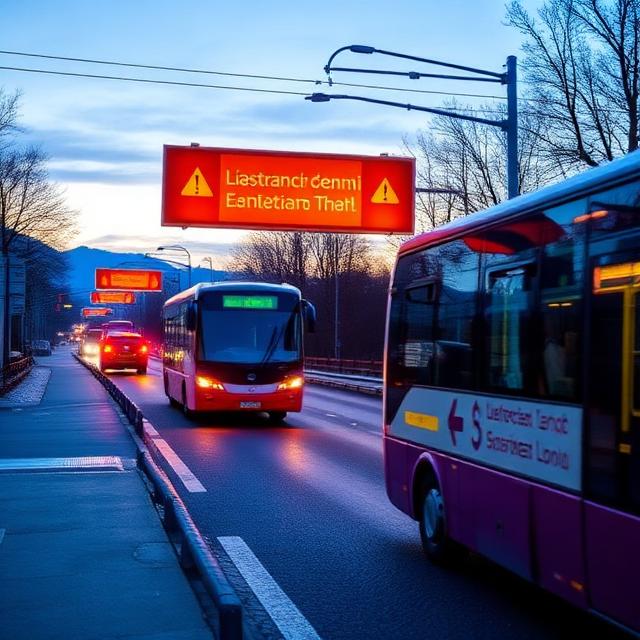
Slovenia’s record-breaking 2026 tourism surge has hit a structural wall. Official data from the Statistical Office (SURS) reveals that the country logged a historic 810,000 arrivals and over 2 million overnight stays in June alone, driven by an aggressive global shift toward “coolcationing” in alpine and rural mountain municipalities [Dnevnik]. However, this massive volume has completely outpaced national transport infrastructure. Travelers navigating central transport corridors face severe daily gridlock on the A1 and A2 motorways, while regional multi-use paths face dangerous overcrowding [Metropolitan.si, Dnevnik].
Simultaneously, a ground-shifting environmental report published by the Organisation for Economic Co-operation and Development (OECD) reveals that transportation accounts for 36% of Slovenia’s entire greenhouse gas emissions—the second-highest share in the EU [Dnevnik]. To force an immediate reduction in emissions, the OECD has officially recommended strict policy changes: abolishing the flat-rate highway vignette system in favor of per-kilometer mileage pricing for passenger cars, eliminating untaxed commuter subsidies, and cutting corporate workplace parking privileges [Dnevnik].
Furthermore, international reviews on the Slovenia Travel Forum reveal that while the country is a scenic paradise, family travelers find cycling on shared regional roads highly stressful, with dedicated bike paths frequently ending abruptly “in the middle of nowhere” [Metropolitan.si].
While state institutions debate long-term infrastructure overhauls, local Slovenian citizens can immediately step into these gaps. By deploying targeted, decentralized private infrastructure, any everyday resident can turn national transit problems into premium, high-utility business streams.
Here are three exhaustive, step-by-step blueprints ready for local deployment.
Blueprint 1: The B2B “Commuter-Pool” Hub & Peripheral Transit Network
The Infrastructure Gap: The OECD is pushing for the immediate end of untaxed commuting allowances (nadomestilo za prevoz na delo) and free workplace parking spaces to force vehicles off city ring roads [Dnevnik]. Local workers driving into central hubs face a severe financial penalty as highway mileage pricing rolls out, yet public transit networks cannot handle the daily influx [Dnevnik].
The Citizen Business Solution: Utilize private land or a leased field located on city perimeters (outside congestion zones) to establish a private carpool hub and high-frequency corporate shuttle service.
The System Setup:
- The Hub: A cleared, secure gravel or grassy plot close to a major regional arterial highway exit (e.g., outside Ljubljana, Maribor, or Celje).
- The Vehicle: An 8-to-15 passenger high-top transit van (e.g., Renault Master) requiring standard licensing.
- The Booking Infrastructure: Settle a commercial agreement with enterprise offices in urban business parks who are losing their corporate parking perks [Dnevnik].
Step-by-Step Action Ritual:
[06:30 - Carpool Landing] ➔ [07:00 - High-Occupancy Boarding] ➔ [07:20 - Express Drop-off]
- The Peripheral Intercept (06:30 AM – 07:00 AM): Commuters driving from rural areas arrive at your peripheral gravel hub. Instead of entering the gridlocked city center individually and paying per-kilometer tolls and office parking fees, they park their cars securely on your plot for a low flat daily rate (€3–€5) [Dnevnik].
- The High-Occupancy Boarding (07:00 AM): Workers from the same industrial zone gather at your central wooden terminal hut. They scan a corporate QR code on your shuttle van to verify their company-subsidized transport pass.
- The Bus-Lane Bypass (07:00 AM – 07:20 AM): You load 8 to 12 commuters into a single transit vehicle, instantly taking 8 private vehicles off the city road. Your shuttle utilizes dedicated public transport lanes (yellow lanes) to cruise seamlessly past gridlocked commuter traffic directly to the office park gates.
The Financial Payoff: You bill corporate enterprises directly on a monthly retainer per employee seat. Employers gladly pay €80–€120 per month per worker because it resolves their office parking space shortages and demonstrates corporate compliance with national carbon-reduction goals [Dnevnik].
Blueprint 2: The “Kolesarski Spas” Mobile Logistics & Route-Rescue Network
The Infrastructure Gap: International family tourists note that cycling across Slovenia is highly stressful because dedicated paths merge directly into fast-moving vehicle traffic or terminate unexpectedly, forcing family groups onto dangerous regional roads [Metropolitan.si]. Walkers and local commuters also complain about safety on mixed-use paths like the loops around Lake Bled [Metropolitan.si].
The Citizen Business Solution: Establish a private mobile route-rescue and luggage-forwarding network along popular trail networks (e.g., Parenzana, Dravska pot, Soča trail) to transport families through dangerous chokepoints [Metropolitan.si].
The System Setup:
- The Hardware: A multi-passenger van equipped with a professional, rapid-load hydraulic rear hitch rack capable of holding 4 to 8 heavy e-bikes securely.
- The Digital Mesh: Place visible, weatherproof wooden plaques featuring high-utility QR codes at known infrastructure endpoints or dangerous mixed-use crossings [Metropolitan.si].
Step-by-Step Action Ritual:
[09:00 - Luggage Sweep] ➔ [13:00 - Infrastructure Rescue] ➔ [16:00 - Destination Handover]
- The Luggage Sweep (09:00 AM): Partner with boutique guesthouses along a scenic route. Travelers check out of their hotel in Bled to cycle to Bohinj completely unburdened [Metropolitan.si]. You pick up their heavy luggage and equipment bags directly from the lobby, charging a flat forwarding fee (€10–€15 per bag).
- The Infrastructure Rescue Intercept (13:00 PM): A family with young children reaches a point where the safe bike path terminates directly onto a main road with heavy truck traffic [Metropolitan.si]. They spot your path signpost: “Dangerous road ahead. Scan here to bypass this section safely via private transport.” [Metropolitan.si]
- The Rapid Load-Out (13:15 PM): The stranded family scans the code, sharing their live location. Your dispatch app routes your van to their exact node within 15 minutes. You load their bikes onto the rear rack, load the family into the air-conditioned cabin, and transport them safely past the 15-kilometer hazard zone to the next safe trail segment [Metropolitan.si].
The Financial Payoff: You clear €40–€60 per transport loop from families who value peace of mind and safety [Metropolitan.si]. Combined with morning and afternoon luggage forwarding commissions from local providers, a single van operator pulls in a premium, independent daily income throughout the autumn season [Metropolitan.si].
Blueprint 3: The Automated Rural “Podeželje Power-Hub”
The Infrastructure Gap: The OECD report explicitly emphasizes that future green mobility incentives must be strictly focused on podeželje (rural and countryside populations) where transport alternatives to private cars are non-existent [Dnevnik]. While Slovenia has seen a massive 150% explosion in e-bike and electric vehicle registrations, deep countryside paths completely lack necessary charging networks, forcing cyclists to plan routes exclusively around major cities [Dnevnik].
The Citizen Business Solution: Turn a private rural home, field, or farmstead into an automated, self-service solar charging station and fresh local food stop [Velogalaxie].
The System Setup:
- The Power Core: Mount a weather-protected, fast-charging e-bike station box (such as a LiON Box or bike-energy hub) to an external wall [ONgineer, bike-energy].
- The Self-Service Pantry: Install a smart, secure glass-front refrigerator equipped with an integrated QR-code payment lock terminal.
- Stocking Strategy: Pack the fridge with uniform, vacuum-sealed, fiksna ponuda (fixed-price) fresh local plates: local mountain cheeses, dry Štajerska salamis, homemade bread, and jars of cold honey-infused juice.
Step-by-Step Action Ritual:
[Cyclist Docking] ➔ [The Automated Fridge Unlock] ➔ [45-Minute Passive Sale]
- The Docking Hook: A rural cyclist pulls into your courtyard using navigation tags from apps like Komoot [Turvec]. They plug their battery into your fast-charger completely free of charge [cyseekinbike]. The electricity costs you less than €0.40 per charge, but it serves as your primary marketing anchor to secure their physical presence for the next 45 minutes [Velogalaxie].
- The Automated Fridge Unlock: While waiting for the battery to top up [Velogalaxie], the hungry cyclist approaches your outdoor self-service kiosk. They scan the prominent QR code on the fridge door, which displays a simple message: “Unlock the Farm Fridge – Fresh Local Lunch Platter: €20.”
- The Passive Transaction: The guest inputs their card details, the smart door clicking open automatically. They pull out a pre-packaged, zero-prep traditional charcuterie plate and sit down at your wooden picnic bench under the vine canopy.
The Financial Payoff: This business requires zero manual hosting or on-the-spot kitchen labor. You spend 20 minutes in the morning stocking the fridge with local kmetija items, and the automated system processes high-margin €20–€40 transactions passively while you go about your day.

Leave a Reply